

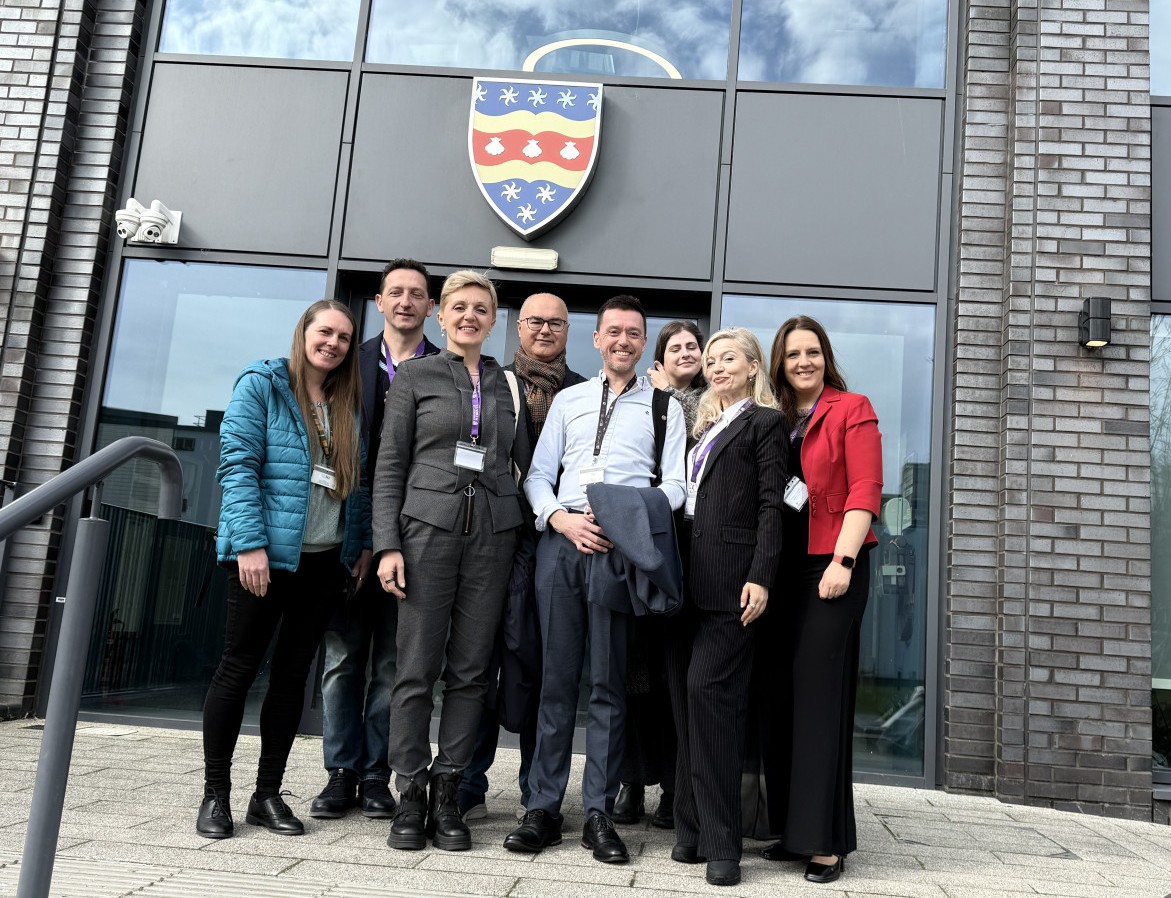
The delegation from Montenegro, which included MSc Valentina Radulović, Executive Director of the Science and Technology Park of Montenegro, visited Plymouth from 2 to 6 March 2026 as part of the Plymouth–Montenegro Partnership Development Programme, implemented with the support of the British Council.
In addition to the representative of the Science and Technology Park of Montenegro, the delegation also included prof. Senka Šekularac-Ivošević, phd, Vice-Dean for International Cooperation at the Faculty of Maritime Studies Kotor; Prof. Špiro Ivošević, phd, from the Faculty of Maritime Studies Kotor; MSc Denis Vukašinović, President of the Boka Navy Kotor; and Bojana Femić Radosavović, phd, Executive Director of United Minds Academy and a visiting lecturer at the University of Montenegro.
This important visit represents a continuation and deepening of the cooperation initiated at the ministerial meeting held in Kotor in 2025, with the aim of further strengthening the partnership between Montenegro and the United Kingdom in the areas of maritime affairs and the blue economy, sustainable development, cultural cooperation, as well as enhancing the innovation ecosystem and entrepreneurial capacities—key fields in which the Science and Technology Park of Montenegro is actively engaged and provides support to the community.
The programme began at the University of Plymouth, where members of the delegation held discussions with representatives of the Marine Institute and the Sustainable Earth Institute on contemporary research in the fields of marine science, sustainability, and interdisciplinary approaches to global environmental challenges. On that occasion, the delegation also visited key university facilities, including the Marine Building, the COAST laboratory, and laboratories for digital fabrication and immersive visualisation, where advanced research and technological infrastructure was presented.
As part of the programme, the delegation visited The Box, a cultural centre and one of the most significant institutions of cultural and historical heritage in the city. During the tour of the exhibitions and discussions with the expert team, the ways in which cultural institutions contribute to education, the development of local identity, and the promotion of cultural heritage were presented.
A particular focus of the visit was on innovation, urban regeneration, and the development of creative industries. Organised by the Real Ideas Organisation, the Montenegrin delegation visited Devonport Guildhall and Market Hall, where projects connecting creative industries, social entrepreneurship, and new technologies were presented, including the application of immersive digital content in cultural and educational programmes. These examples represent a strong model and inspiration for application in Montenegro, through initiatives and projects continuously developed and supported by the Science and Technology Park of Montenegro. The delegation then participated in the Creative UK Investment Summit in Falmouth, held at the National Maritime Museum Cornwall. The programme continued with a visit to the Plymouth Sound National Marine Park, a unique marine park located within an urban environment. Towards the end of the visit, the Montenegrin representatives also visited the Ocean Conservation Trust, where programmes dedicated to ocean conservation, marine education, and global initiatives aimed at protecting marine ecosystems were presented.
The visit programme concluded with a meeting at Plymouth Business School, where the key topics included innovation, entrepreneurship, and sustainable development—precisely the areas on which the Science and Technology Park of Montenegro is founded and through which it implements initiatives aimed at strengthening the technological ecosystem.
Meetings aimed at further deepening the cooperation will continue on 30 and 31 March, when partners from Plymouth will visit Montenegro, thereby enabling further exchange of ideas and experiences.
The Montenegrin delegation expresses special gratitude to the partners and hosts in Plymouth who contributed to the organisation and implementation of the programme, in particular to Rupert Lorraine, Iain Bennett, Katie Shorten, as well as numerous associates from all host institutions who enabled a high-quality exchange of knowledge, experience, and ideas between partners from Plymouth and Montenegro. Special thanks are also extended to the British Council and project manager Jelena Vidović for enabling the realisation of the visit.
The Science and Technology Park of Montenegro remains committed to strengthening Montenegro’s capacities in the fields of sustainable development, innovation, entrepreneurship, as well as culture and the creative industries.


Science and Technology Park Montenegro
Science and Technology Park Montenegro was established with the aim of providing support and strengthening the potential of economic growth and development of Montenegro
Strategy partner

© 2024 ntpark.me / All rights reserved